
Roofing That Outlasts the Structure Beneath
Slate roofing in Pittston for properties where longevity and structural integrity are the primary requirements
The older farmhouses, colonials, and cape-style homes that define much of Pittston’s residential character were built with heavier framing, deeper rafters, and steeper pitches than most modern residential construction. That structural heritage makes many of these properties genuine candidates for slate roofing, which requires a roof capable of supporting the material’s substantial weight—typically between 800 and 1,500 pounds per square depending on thickness and slate type. ABL Roofing installs slate for homeowners who want a roof that will not be replaced in their lifetime, and in many cases not in the next generation’s either.
Slate installation is a trade-specific skill that cannot be replicated with standard roofing practices. Each tile is hand-nailed individually using copper or stainless steel fasteners that resist corrosion through a century of contact with the stone. ABL Roofing begins every slate project with a structural load assessment to confirm the framing can carry the additional dead load, installs a code-compliant underlayment before the first course is set, and lays out the horizontal coursing lines, headlap distances, and tile sizing sequences by hand before a single nail is driven.
Request a structural and site evaluation to determine whether your property’s framing is prepared for slate installation.
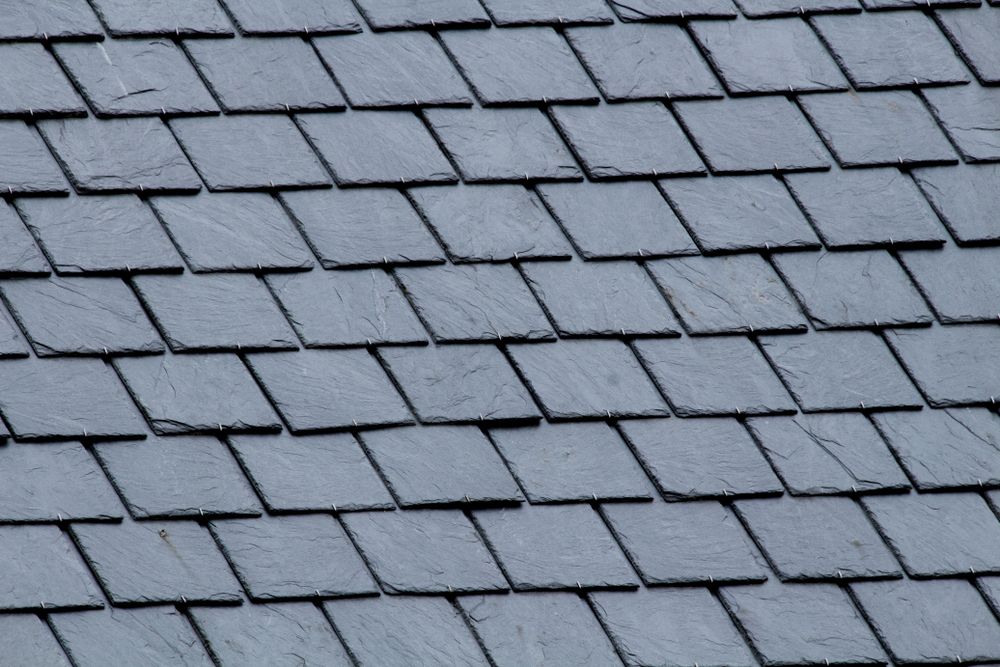
How Slate Handles Conditions That Degrade Other Materials
Slate functions differently from manufactured roofing materials because it is a natural stone product with no organic core, no granule surface coating, and no adhesive layer capable of degrading over time. The material does not absorb water, does not support biological growth across its face, and does not compress or distort under sustained load. ABL Roofing calibrates fastener placement to allow each tile to hang under gravity rather than being pinched between fasteners, a distinction that prevents stress fracturing through thermal movement and allows the installation to perform correctly across decades of use.
A properly installed slate roof shows consistent coursing alignment, uniform headlap across the full field, and no chipped corners at the fastener holes—all indicators that tiles were selected, sorted, and nailed by someone experienced with the material. After installation, the interior ceiling below the roof stays dry even when snow and ice accumulate heavily on the surface, because slate’s natural density prevents moisture wicking through the tile body. ABL Roofing clears the job site of slate debris, staging equipment, and removed roofing material after each work phase, so the property is left clean as each section is completed.
Slate also requires flashings—typically copper or lead-coated copper—that are matched to the material’s service life. Using shorter-lived flashing metals defeats the purpose of a century-scale installation, because the flashings will fail long before the slate does. Valley and chimney flashings on a slate installation are formed on site to fit the specific geometry of the roof rather than cut from standard stock.
What Property Owners Ask About Slate Roofing
Slate is a specialized installation, and homeowners considering it for Pittston properties typically have specific questions about the process, the material’s behavior, and what the finished roof requires going forward.
- How is the structural load assessment for slate conducted? The framing is inspected for rafter size, spacing, span, and existing load conditions to calculate whether the structure can carry the additional dead weight of slate without modification to the underlying structure.
- What type of fasteners are used in slate installation and why does it matter? Copper or stainless steel nails are used because they resist corrosion across the full service life of the slate, while galvanized fasteners will oxidize and fail within decades, causing tiles to slip before the slate itself is worn.
- How do you identify a slate tile that needs replacement without disturbing the rest of the roof? A damaged tile is identified by the hollow sound it makes when tapped, visible surface delamination, or cracking at the nail hole, and it can be removed and replaced individually using a slate ripper tool without disturbing the adjacent courses.
- Why does headlap measurement matter in a slate installation? Headlap—the amount each tile overlaps the one two courses below it—determines how well the roof resists wind-driven water working upslope beneath the tiles, and the correct measurement is calculated from the specific pitch of the roof being worked.
- What maintenance does a properly installed slate roof require over its lifespan? Periodic inspections to check flashing integrity and identify any cracked or slipped tiles are the standard practice; the slate field itself requires no coating, sealing, or surface treatment throughout its life.
ABL Roofing handles slate installation for property owners in Pittston ready to invest in a roof built to generational timelines. Arrange a consultation to review your property’s suitability and walk through the installation process in detail.