
Flashing Failures That Show Up Indoors First
Chimney flashing in Pittston for homes with ceiling stains, damp masonry, or visible separation at the chimney base
Water stains on the ceiling near the fireplace, soft drywall along the interior chimney chase, or damp masonry at the chimney breast are the points where chimney flashing failure makes itself known to the homeowner—often long after the actual breach has been working. ABL Roofing handles chimney flashing installation and replacement in Pittston for homeowners tracing moisture back to the roof-chimney junction, one of the most consistently misdiagnosed water entry points on any residential property. The joint between a chimney’s masonry and the roof deck is a structural gap that must be sealed with layered metal flashing, not caulk, and that distinction is precisely where most DIY repairs and low-quality replacements eventually come apart.
ABL Roofing’s chimney flashing process begins with removing the old flashing assembly completely, inspecting the underlying masonry and roof decking for deterioration, and installing a two-part system: step flashing that integrates with the roofing material at the chimney sidewalls, and counter flashing cut into the mortar joints of the chimney itself. The counter flashing is embedded into a saw-cut reglet in the mortar and set with a flexible, non-caulk compound that allows the chimney structure and the roof deck to move independently through thermal cycles without breaking the seal. On many older Pittston homes, the original installation used a single-piece flashing bent from galvanized sheet and surface-applied without a reglet cut—which explains why so many of those installations eventually fail at exactly that joint.
Request a roof and chimney inspection to identify exactly where water is entering and what the correct flashing configuration requires.
Why Chimney Flashing Fails and How to Stop It
Most chimney flashing failures originate at one of two locations: the step flashing joints where the sidewall meets the roof slope, or the counter flashing embedded in the mortar course. Step flashing fails when individual L-shaped pieces are not lapped tightly beneath the adjacent shingle course, leaving an opening for water to travel laterally beneath the surface rather than shedding off the edge. Counter flashing fails when mortar joint adhesion breaks over time—which is a normal process on any aging masonry chimney—or when the flashing was surface-applied with sealant rather than embedded into the joint. ABL Roofing addresses both failure modes in the same installation rather than patching one while leaving the other side of the assembly vulnerable.
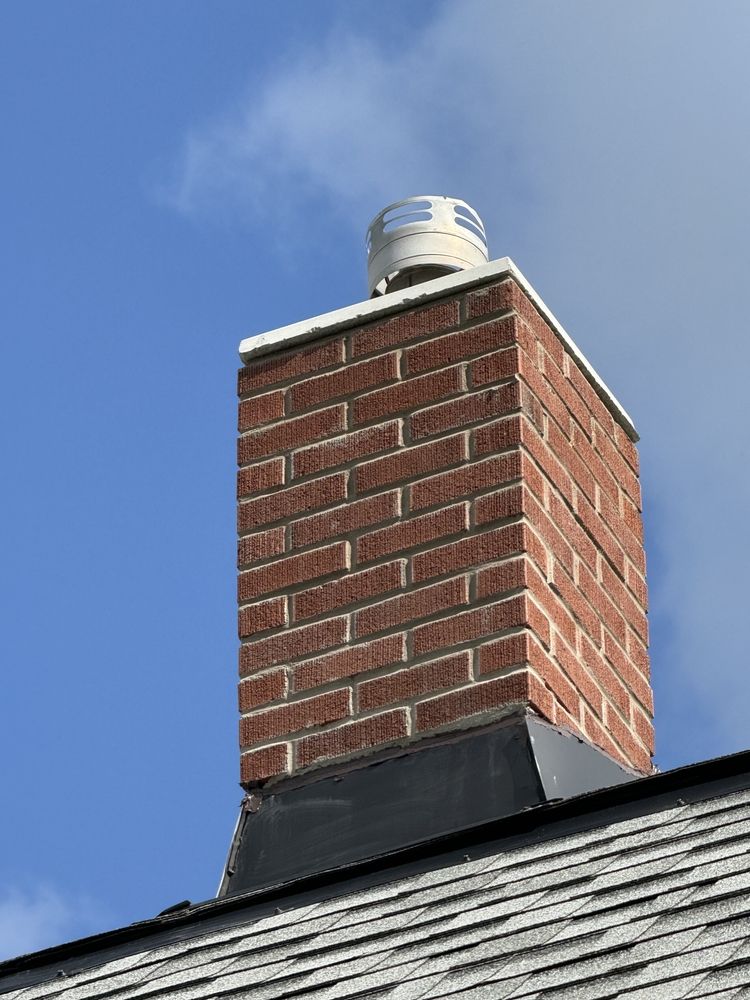
After a complete flashing replacement, the interior symptoms that indicated the problem—ceiling staining, damp insulation, soft plaster near the hearth—will stop progressing. The visible change outside the home is a tight, layered metal assembly at the chimney base, with counter flashing lapping correctly over the step flashing on all sides and no visible sealant bridging the gap between chimney and roof surface. Property owners in Pittston with older brick or stone chimneys frequently discover during this process that the masonry itself requires repointing before the new flashing will hold long-term, because flashing embedded in deteriorating mortar will work loose within a few thermal cycles.
Chimney flashing work is coordinated closely with the surrounding roofing material. When flashing is being replaced as part of a new roof installation, step flashing courses are set as each shingle row is completed—a sequencing requirement that cannot be reversed after the field is laid. When flashing is being replaced on an existing roof, the surrounding shingles must be carefully lifted and reset to allow correct integration, rather than simply sliding new flashing behind existing courses. ABL Roofing handles both scenarios with the same standard of detail regardless of whether the project is a full re-roof or a targeted chimney repair.
Questions About Chimney Flashing Work
Property owners dealing with chimney-related water entry in Pittston often have specific questions about why the flashing failed and what a correct installation actually involves at each stage.
- What is the difference between step flashing and counter flashing, and why are both required? Step flashing consists of individual L-shaped pieces layered with the roof material along the chimney sidewall, while counter flashing is embedded in the chimney masonry and laps down over those pieces—together they form a two-stage water barrier that neither component can form alone.
- How do you determine whether the masonry needs repointing before new flashing is installed? Mortar joint condition is assessed by probing with a tool; soft or crumbling mortar will not hold counter flashing set into a saw-cut reglet, and repointing is required before the new flashing assembly will function correctly over time.
- Why does surface-applied caulk fail as a substitute for properly formed and embedded flashing? Caulk has a limited adhesion lifespan on masonry and metal surfaces and cannot accommodate the differential movement between a chimney structure and a roof deck—properly formed metal flashing handles that movement mechanically without relying on bond strength.
- How is chimney flashing replaced on an existing shingle roof without removing the surrounding courses? The adjacent shingle rows are carefully lifted to expose the old step flashing, the existing assembly is removed completely, new step flashing is set in sequence with those courses, and the shingles are reset over the new installation wherever they remain in acceptable condition.
- What should a properly completed chimney flashing assembly look like from the ground? The counter flashing should sit flush against the masonry with no visible lifting or separation at the edges, the step flashing should be fully concealed beneath the adjacent shingle courses on all sides, and no sealant should be visibly bridging the gap between the chimney face and the roof surface.
ABL Roofing serves homeowners in Pittston who need chimney flashing replaced correctly—whether as part of a new roof installation or as a standalone repair on an existing roof with active water entry. Arrange an inspection to assess the flashing condition and define exactly what the job requires.